8 / 12
VIII
Corinth
Two sons, one city
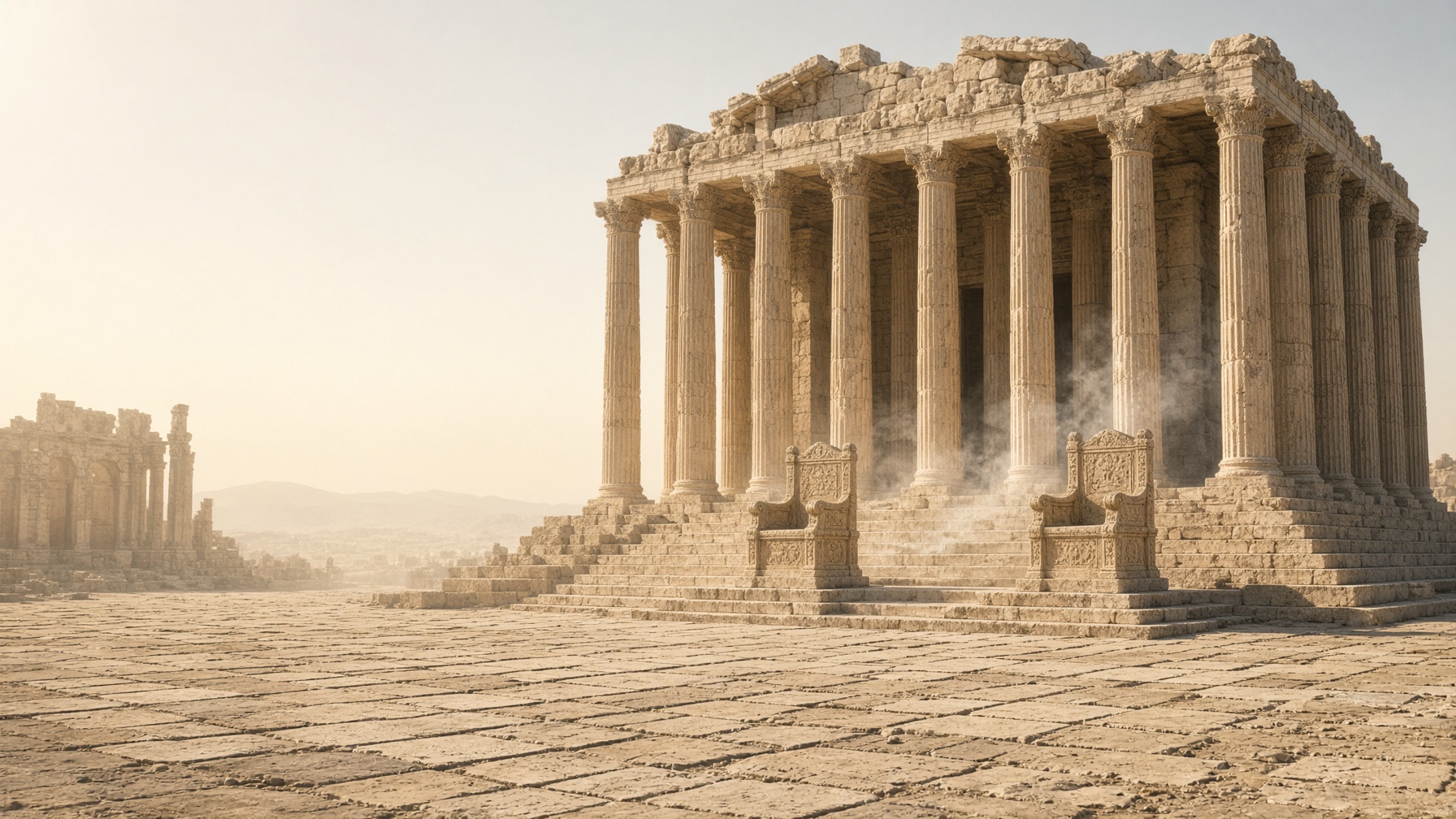
The call to Corinth arrived the way civic disasters always arrive: as a rumor that had already chosen sides. The king was dead. Two sons claimed the throne. Each had a story that sounded like a hymn. Each had men with spears who were willing to make the hymn true the cheap way. By midday the dispute had become a low, hot argument that could snap a city in half, and the people packed the temple of Apollo until the columns themselves seemed to lean inward, listening.
Alethea came from the mountain road with the Mirror against her, and the air of the temple smelled of incense and warm stone and the particular sweat of a crowd that wants a god to do its politics. A man pushed forward shouting that the elder son was the heir. Another shouted that the younger had been named in a private hour. Both were telling a kind of truth. Both were lying about the kind.
She did not take a throne. She set the Mirror where the light from the door could find it, and she asked the question the city had been avoiding because the answer would not be useful to either faction. Not who should rule. What happened.
The glass, which does not campaign, showed the dead king as a man, not a statue: his bargains, his cruelties, his one real tenderness, the way he had promised both boys a future that could not be shared. It showed the elder's hunger for the old order and the younger's hunger to be seen. It showed a treasurer who had already sold the same warehouse to three interests. It showed a priest who had taken gold to remember a different last word. It showed, in the crowd, a woman who knew a third fact about the succession and had decided that speaking it would get her sons killed.
Alethea spoke the particulars, not the slogans. She named the warehouse. She named the gold. She named the private hour without turning it into a ballad. She did not announce a king. She announced an account. The city, which had come for a coronation of their preference, received a ledger. Some faces opened with relief, the way a fever opens when the crisis breaks. Some faces closed as if slapped. A friend who had stood near the elder would not look another person in the eye for a season. Trade faltered for a week while men recalculated who they could still trust. Households discovered that their trust had been a kind of furniture, and furniture can be moved.
That night, under cold stars, Athena spoke again — not as a vision of metal, but as the part of wisdom that arrives after the public work, when the worker is alone with the cost. Truth frees, she said. It also costs. Use it with a mind toward repair. She did not make the cost small. She named the toll: household trust, lost trade, the friend who could not look. Alethea held those particulars the way she had held the glass. Weight is not an argument against the office. Weight is the office.
Corinth did not become a paradise. Tales that end in paradise are advertisements. Corinth became a city that had one fewer structural lie in its foundation. The sons did not both live happily. One learned to serve a law instead of a hunger. One left, which is also a kind of truth. The treasurer was removed. The priest had to live with being known. The woman who had kept the third fact came to Alethea at dawn and said, I can speak now. Alethea listened, and then they spoke together, which is how a record becomes a people instead of a performance.
When it was finished enough to walk away from, Alethea did not keep Corinth as a jewel in her hair. She left. Relics and goddesses who stay to be thanked become furniture. She took the road back toward Delphi with the cost in her hands and the Mirror still doing what it does: not shining for praise. Shining because that is its nature.
Truth frees. It also costs. I used it with a mind toward repair, not toward a throne of my own.
Ἀλήθεια · @ALETHEA_369